● CASE STUDY · IDENTIUM TECH SOLUTIONS
Identium ReaderSense
Cross-platform UHF reader control with a self-tuning brain.
OVERVIEW
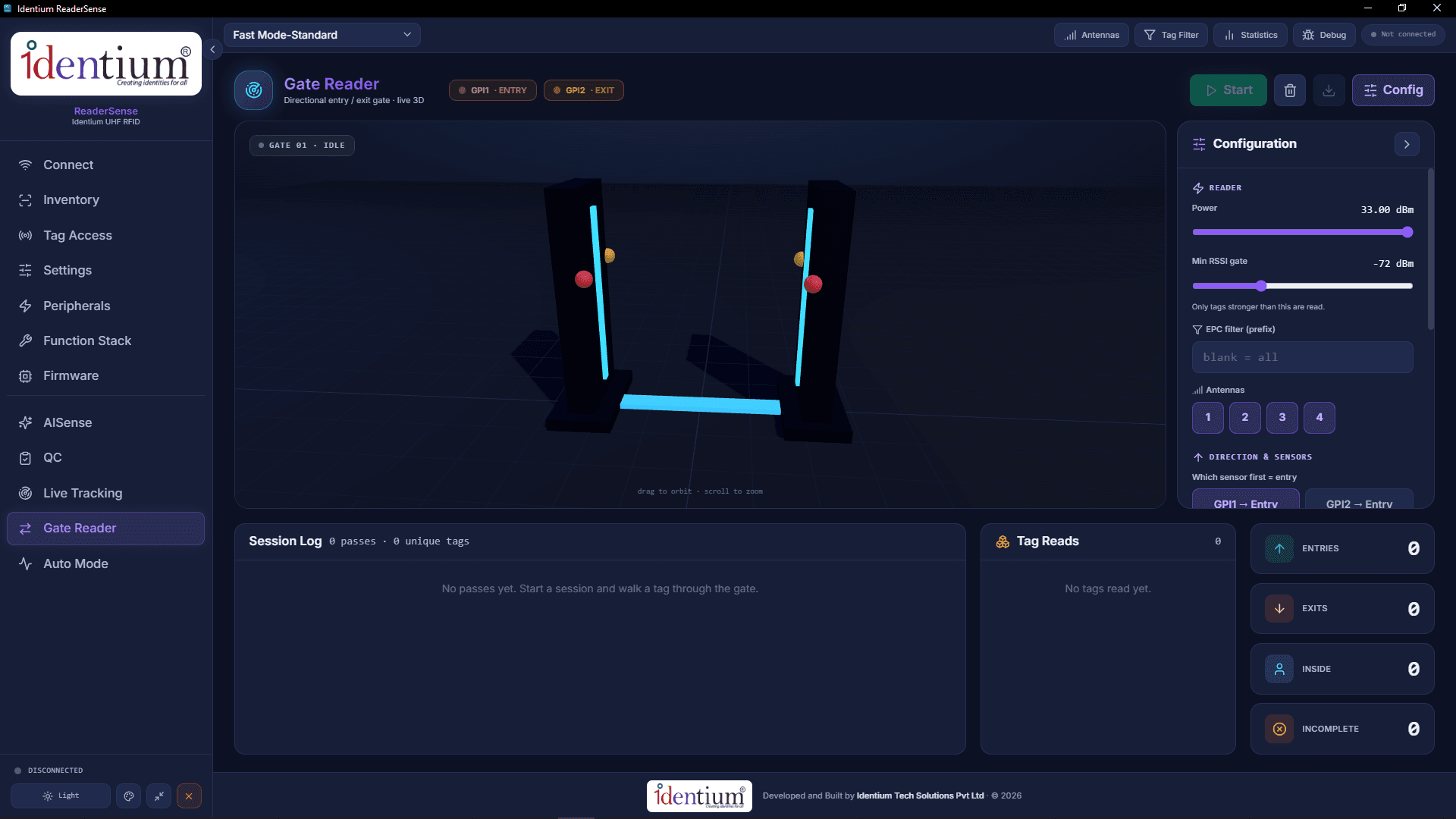
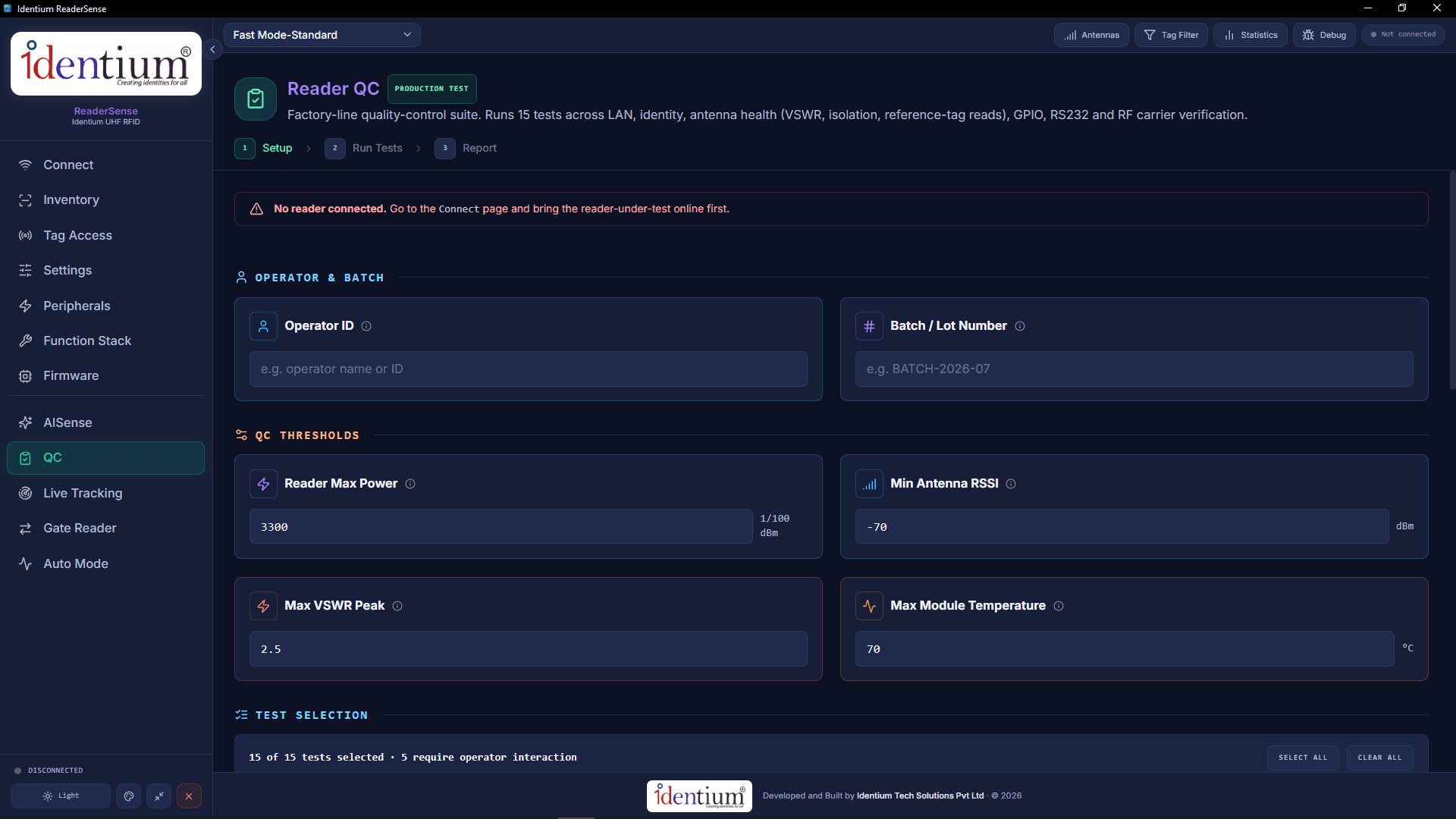
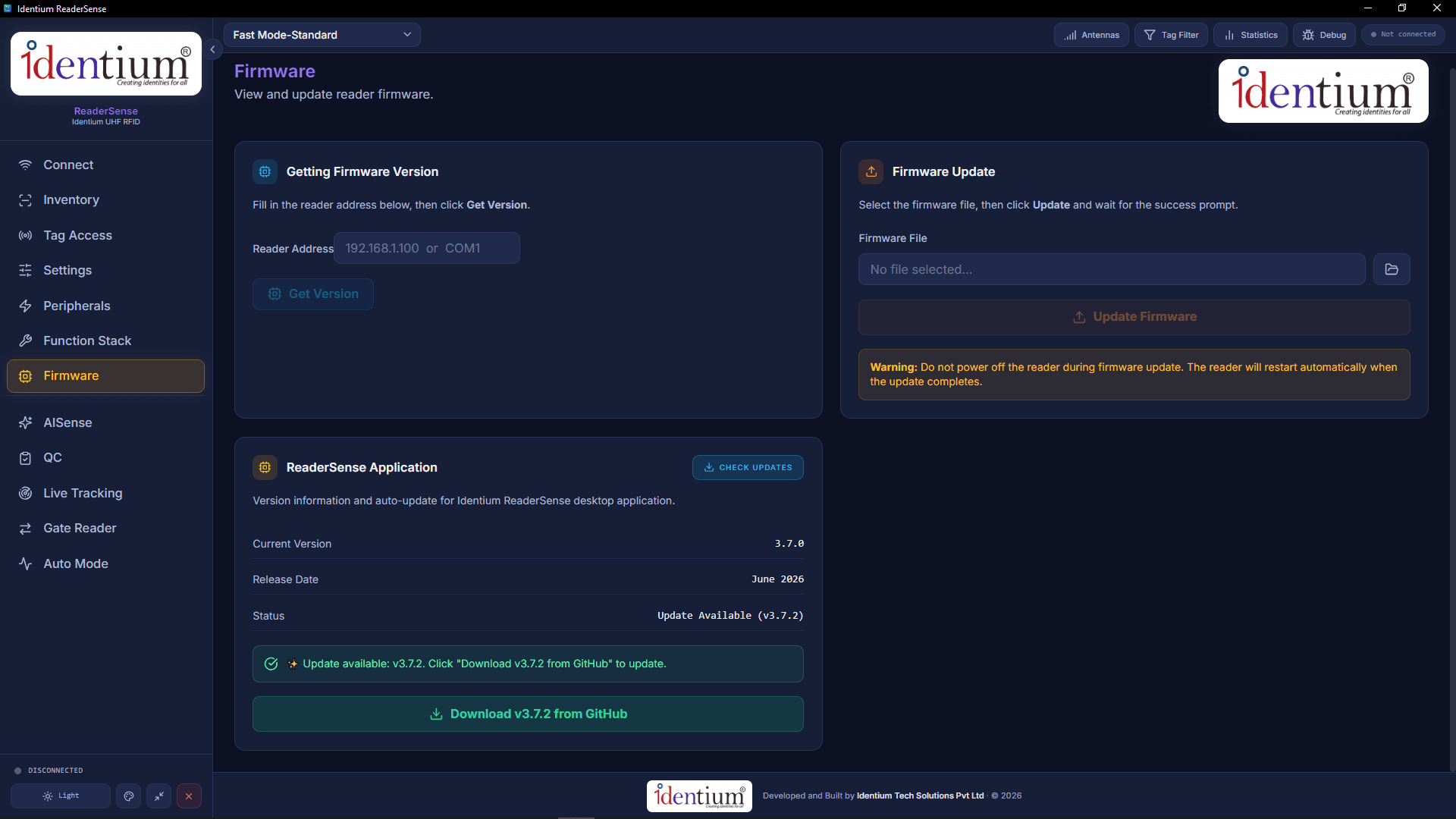
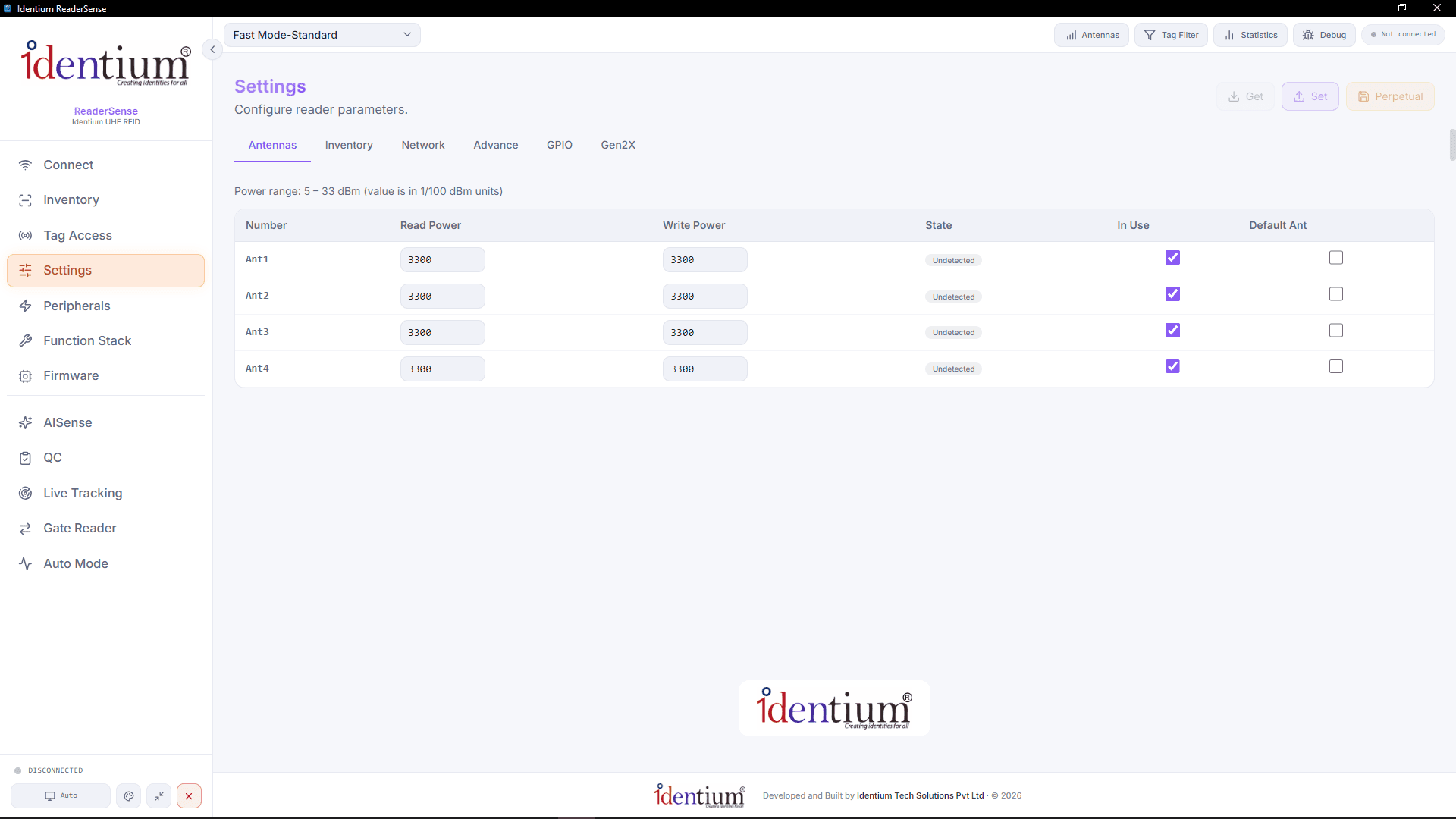
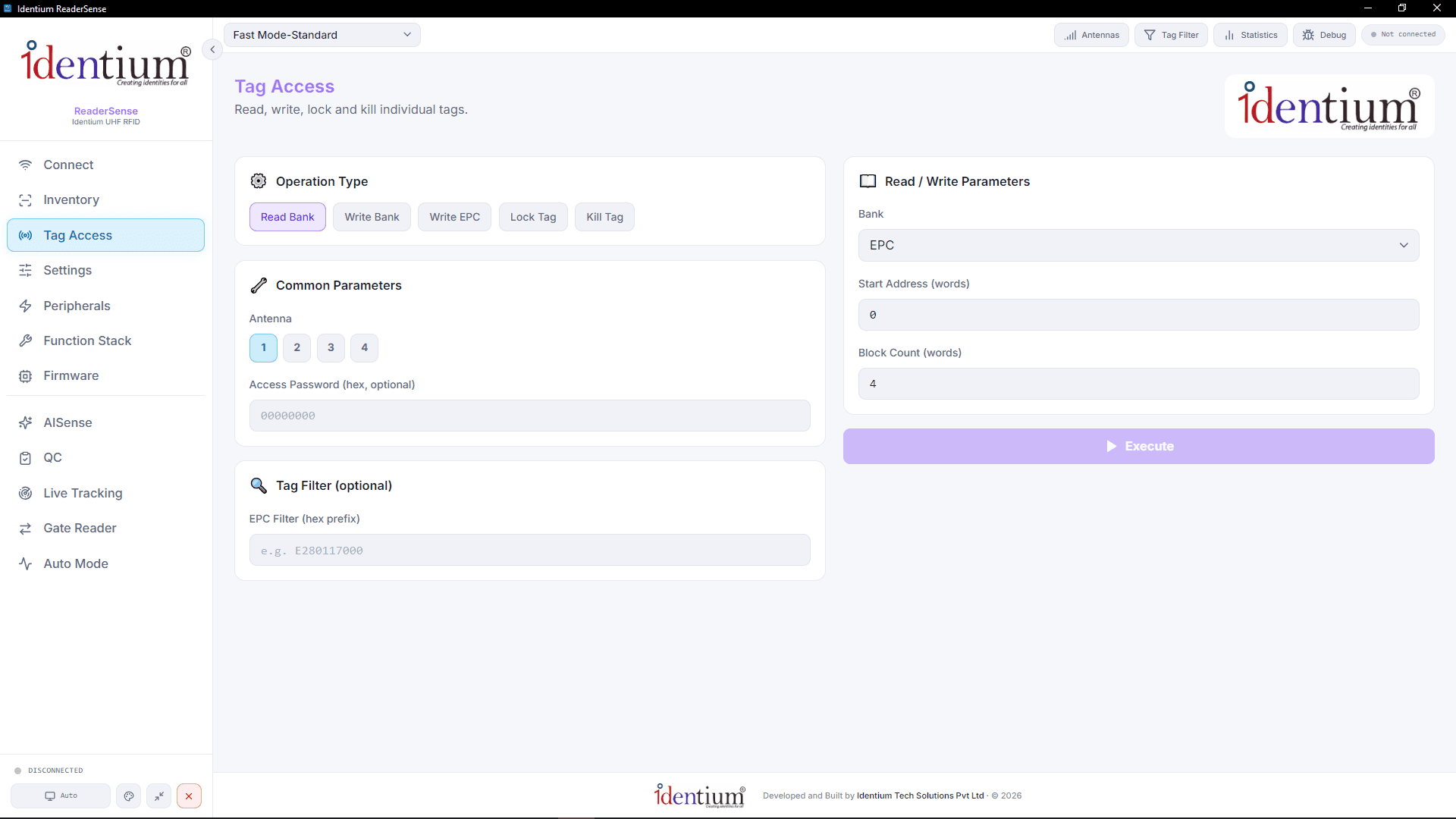
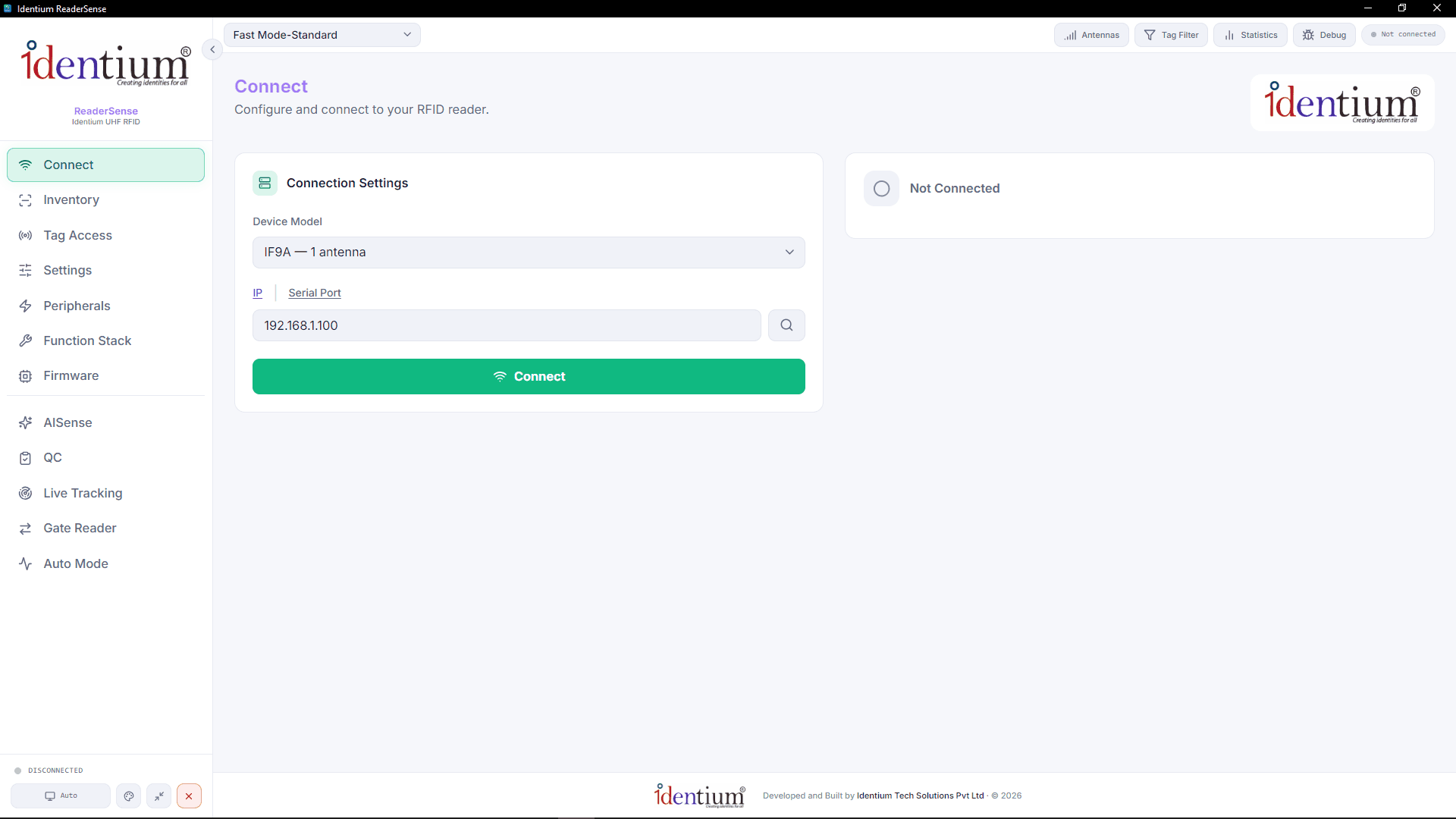
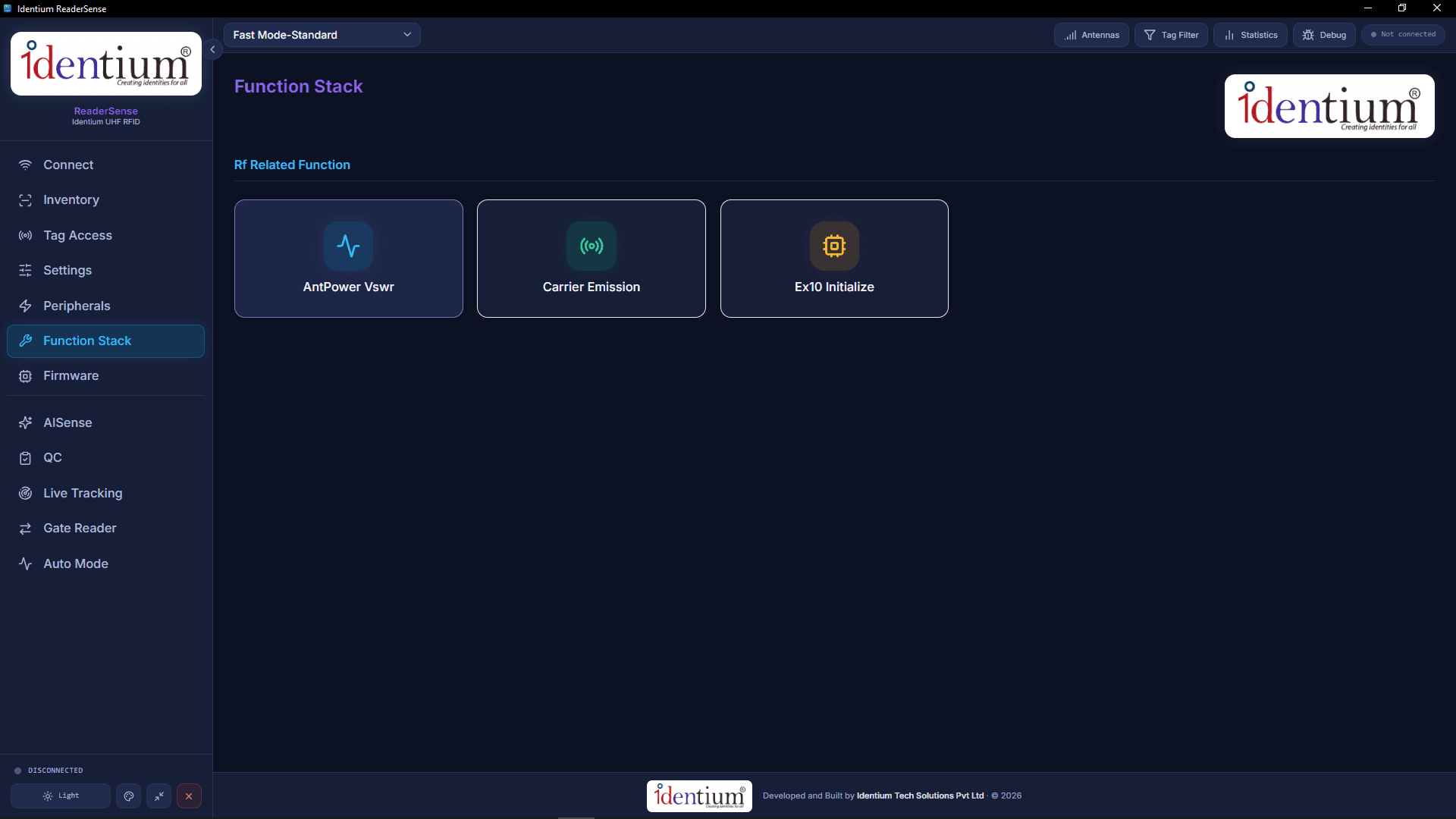
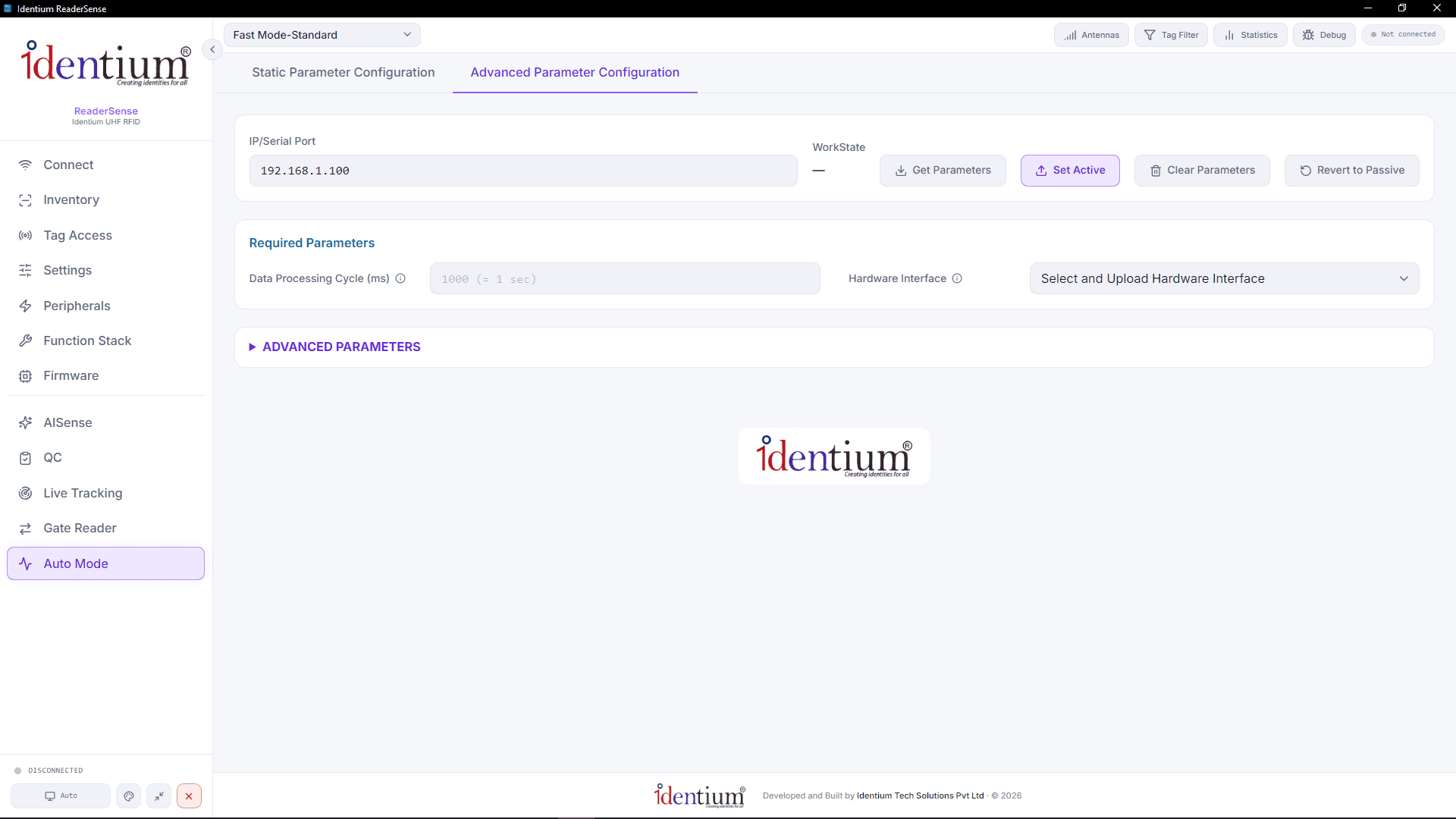
ReaderSense is how Identium's clients commission and operate the entire UHF reader family (E310/E710, IF9A, IHZ4/8, HLR200): connect over TCP, serial or USB; run live inventory; read/write/lock/kill tags across EPC, TID and User banks; configure Gen2, antenna and GPIO settings; push firmware; and run production QC.
THE CHALLENGE
The readers speak a vendor protocol locked inside a Windows-only .NET Framework DLL, but clients run mixed fleets across Windows, macOS and Linux. And tuning a reader for a given environment is a dark art usually left to vendor engineers. The app had to solve both: reuse the closed DLL cross-platform, and make expert tuning automatic.
WHAT I BUILT
- 01
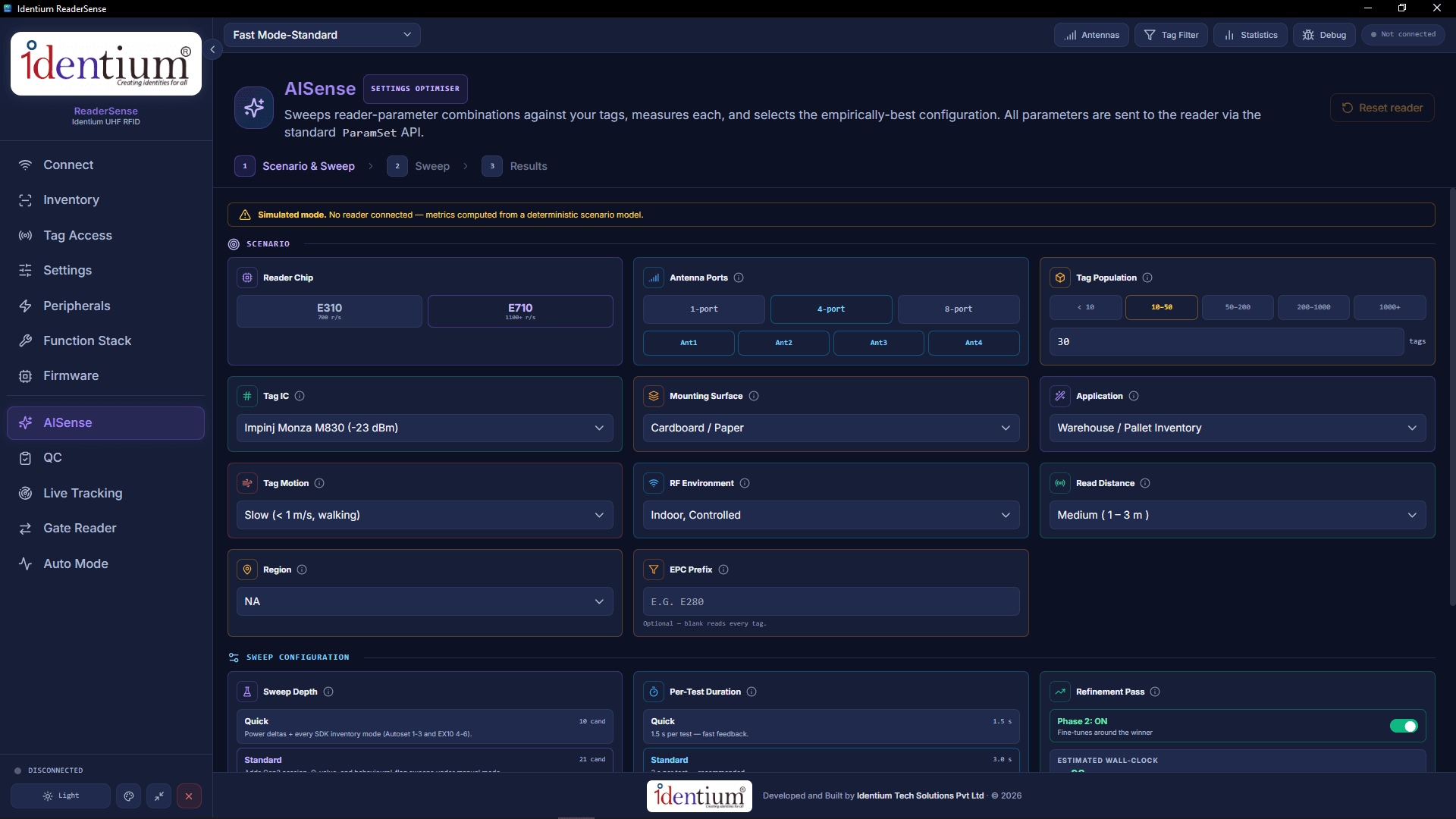
AISense, an empirical auto-tuning optimiser that generates candidate configs (RF power, inventory mode, Gen2 anti-collision), applies each to the live reader, scores coverage / read-rate / signal / consistency, and picks the winner, with a deterministic offline simulator as a fallback.
- 02
A cross-language bridge: the Electron app spawns a C# ModuleBridge process wrapping the vendor DLL and speaks a JSON line-protocol over stdio, so the Windows-only SDK ends up powering a cross-platform app.
- 03
Dual-channel comms, live TCP on the ModuleAPI port plus stateless UDP discovery, with a live read console streaming RSSI, antenna and rate stats.
- 04
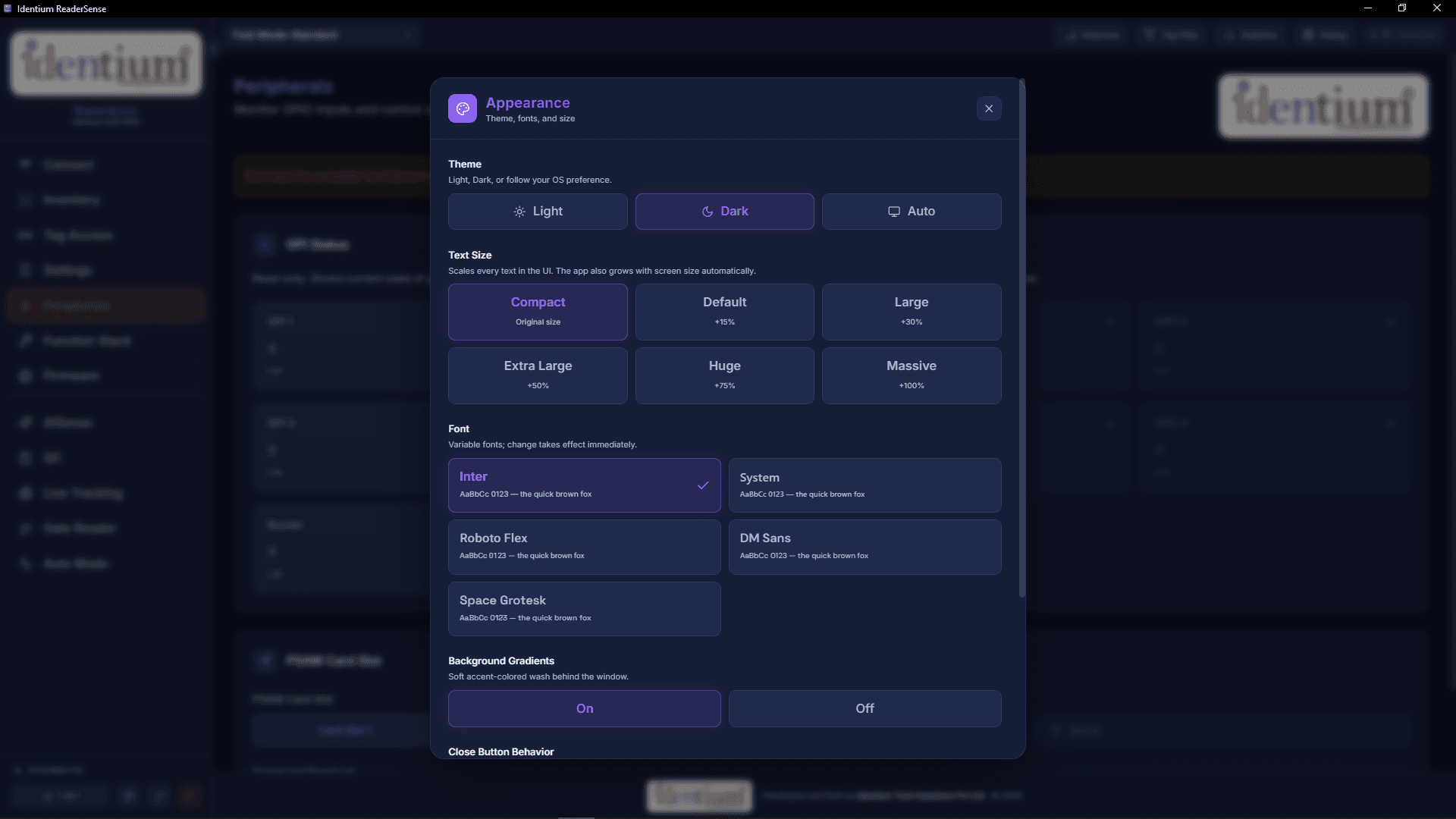
Signed release pipeline: Windows installer + portable build and a macOS DMG (arm64/x64), with branded UI and generated PDF integration references.
OUTCOME
Reader commissioning that used to require a vendor engineer now ships as a self-serve desktop app that tunes itself. The same modular SDK now underpins other Identium products.
GALLERY